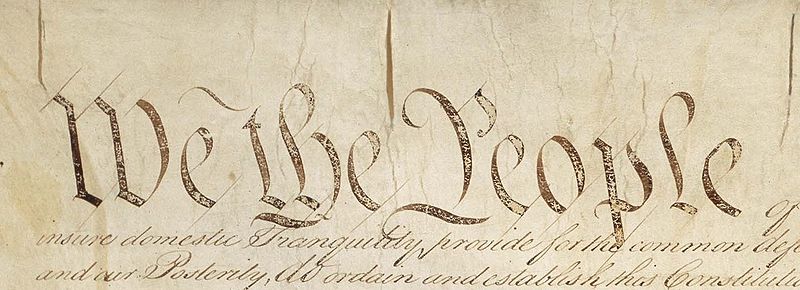
These are the 8
principle I think we as Republicans can all agree on. I understand that I am
not the ultimate authority on these subjects, but this is my attempt to explain
and articulate these ideas.
Through conversation and
further reading and thought these ideas will evolve, but I will be aiming at
seeking the truth of these principles. While I might not always get everything
correct I have faith that if I employ the guiding light of truth I will at
least be able to move in the right direction.
The Importance of Agreed
Principles
Possessing a set of
agreed principles produces many benefits to any type of association, from a
family to a nation. It provides a common narrative and language that can unite
people.
If you look at a company
or industry you will quickly discover they have their own type of language.
They may employ the language native to the country, so any speaker of that
language could understand, generally speaking, the words being used. But
certain terms and words will have different meaning than the common usage.
 Language is more than
just words, it is the meaning behind those words. It is this shared meaning
that generates the narrative that binds a group together. Take a look at the
word Racism. For most people racism means something like discrimination or
hatred of a group of people based on race. To others it means power plus
privilege.
Language is more than
just words, it is the meaning behind those words. It is this shared meaning
that generates the narrative that binds a group together. Take a look at the
word Racism. For most people racism means something like discrimination or
hatred of a group of people based on race. To others it means power plus
privilege.
To those with the first
meaning, the narrative is that anyone can be racist by simply hating a group of
people based on the immutable characteristic of race. The narrative of the
second meaning only allows those who possess power and privilege to be racist.
If someone or some group lacks either of those characteristic they are
incapable of being racist.
Both groups would
probably agree that racism is bad, but they will find themselves at odds
because they do not share the same narrative of what is racism. The power plus
privilege narrative allows those who believe in it the justification for hating
groups of people if it is done by those who are viewed to lack power and/or
privilege.
Those who follow the
first narrative will see any hatred of a group of people based on race as
racism, even if it is done by those who are perceived to lack power and/or
privilege. This is why agreed principles, meaning a shared narrative, is so
important.
The Republican Party has
lost the sense of what it means to be a Republican. This is due to a loss of
First Principles, grounding ideals that we all agree on and unite us.
Currently the slightest
disagreement results in someone being called a RINO (Republican in Name Only)
or not a real Republican. My hope in articulating these principles is to build
a foundation that can bring us all together.
Note: These principles are presented in no particular
order and are up for disagreement and discussion.
Principle 1: Sovereignty
of the Individual
One of the greatest
ideas of western culture is the primacy of the individual over the group. This
idea sprung out of the Judeo Christian idea that each person is created with
the divine spark within them.
 Each person has the freedom
to live their life as they see fit as long as they are not violating the
liberty of others. This places the power, and the responsibility associated
with that power, on the shoulders of each person.
Each person has the freedom
to live their life as they see fit as long as they are not violating the
liberty of others. This places the power, and the responsibility associated
with that power, on the shoulders of each person.
This idea was expressed
in the Declaration of Independence when it was written “That to secure these
rights, Governments are instituted among Men, deriving their just powers from
the consent of the governed.” Each individual consents to invest a part of
their sovereign power into the government so that it can better protect the
natural rights of the individual.
The individual is
possessed of all natural rights, such as freedom of speech, religion,
association, and self-protection. It is the choice of the individual to
consent, not necessarily to agree with, to the government a part of their power
so long as the government uses that power to protect and expand liberty and
freedom.
When a government abuses
this power, a government simply being a collection of individuals, the
individuals can withdraw this consent and abolish the government and replace it
with one more favorable to them. This does not mean that a violent revolution
is in order, but could be done through the use of the ballot box.
Principle 2: Private
Property
The idea of private
property is that an individual not only owns their possessions and property but
that they own themselves. This self-ownership was one of the greatest
advancements in Western thought.
The natural extension of
this thought was the death knell for slavery. If you as an individual own
yourself than no one else can own you.
The idea that an
individual can own something also lends itself to the right of privacy and the
prohibition against unlawful searches and seizures. If you own something then
no one has the right to take it from you without due process.
Ultimately this
principle lends itself to borders. If you as an individual own something you
have a right to grant or deny access to that thing or property. Taking this out
farther, the state, which is a collection of individuals, can determine who is
and is not allowed access to the country.
Principle 3: Fiscal
Responsibility
 This involves both
taxation and spending. It is okay to have welfare programs as long as they
work, create the desired outcome, and we have the money to maintain them.
Republicanism sees debt as a pathway toward corruption and it must be avoided
if a just and functioning state is to be maintained.
This involves both
taxation and spending. It is okay to have welfare programs as long as they
work, create the desired outcome, and we have the money to maintain them.
Republicanism sees debt as a pathway toward corruption and it must be avoided
if a just and functioning state is to be maintained.
We know lowering taxes
help the average person and boosts the economy. Money is most effectively used
when the decisions are done by the individuals most invested in the outcome and
success of those decisions.
This does not mean there
is no role for the government to play in public works, but they should be
financed as locally as possible. There is no reason the people of Utah should
have to finance public works in Florida that they will never see the benefit
nor will they gain personally for doing so.
So we want to keep taxes
as low as possible, yet for this to be effective we have to be willing to also
cut spending. Government spending is highly susceptible to corruption,
contracts being awarded to friends and family members. We saw this with former
Governor Kitzhaber and his girlfriend’s consulting firm.
Another way government
spending gets out of control is that they are incentivized to lose. If a
department is not producing results in the public sector they always claim the
problem is that they did not have enough funding.
This ends up with
ineffective programs increasing in size and requiring more money. The
politicians who started these pet projects gain nothing by admitting they were
flawed, in fact it could cost them their job. So they say the only reason it
failed was due to not enough funding, often blaming the other party for
obstruction of those funds.
The department heads go
along with this because it looks good to run a department that is growing and
it covers any wrong doing on their part.
This is simply a blame
shifting tactic that has a high cost, both in terms of money and public trust.
This is why government spending and programs should be as local as possible, it
increases accountability and oversight by the public who is funding these
programs.
Principle 4: Individual
Virtue
In order to better
understand this we must have a definition of what virtue is. Naturally virtue
is going to have as many meaning as there are people, but for right now we are
going to take it to mean doing what is morally right.
 This is not a loud and
publicly shared virtue but a personal and individual kind of virtue. It is not
virtuous to disparage an individual because you believe they lack virtue, which
is just a different type of virtue signaling.
This is not a loud and
publicly shared virtue but a personal and individual kind of virtue. It is not
virtuous to disparage an individual because you believe they lack virtue, which
is just a different type of virtue signaling.
There are a few kinds of
virtue signaling. The first kind is shaming others for not being virtuous. When
you do that you are implying that you possess more virtue than the person you
are shaming. At that point is has become more about demonstrating publicly your
virtue or the lack of virtue of another person.
The second kind of
virtue signaling is the one often seen during protests. People publicly stating
causes they support, not just because they think it is the virtuous thing to
do, but because they are seeking praise from their peers and the public at
large.
These types of virtue signaling
seek to draw attention on the individual to be praised for their good deed or
to punish those who seem to be less virtuous. Both are corrupting influences.
The goal of virtue signaling is praise and attention, not an attempt to live a
good life.
Instead virtue is trying
to do what is right regardless of praise. To be clear, praise of virtue is not
bad itself, but when the goal is praise or attention instead of virtue it tends
to move an individual away from doing what is right to doing what is popular.
Individual virtue means
that given the means and opportunity to do something wrong that you make the
choice to do what is right. An example of this would be going into a
convenience store that is very busy with your own coffee cup filling it up and
walking out.
You could get away with
this very easily and the clerk or cops probably would not do much to stop you,
but morally it is still stealing. A virtuous individual would wait in line and
pay for the coffee.
Principle 5: Rule of Law
In Republicanism the
country is not ruled by a person or people but is under the rule of the agreed
upon laws. This means that everyone, from the rich to the poor, the famous and
infamous, the highest elected office and the common person, are all subject to
the law.
 This does not mean that
all laws are just or that you have to agree with every law, but you must
respect the law. If you find a law unjust or harmful, seek to change it through
the legal means. We all must accept that there are going to be laws we do not like
but must follow in order to maintain a functioning society.
This does not mean that
all laws are just or that you have to agree with every law, but you must
respect the law. If you find a law unjust or harmful, seek to change it through
the legal means. We all must accept that there are going to be laws we do not like
but must follow in order to maintain a functioning society.
The reason the rule of
law is important is that it is a check on power. In order for it to function
properly the law must be accessible and understandable by the average person.
The Roman senator and historian Tacitus was correct when he observed that “The
more numerous the laws, the more corrupt the government.”
When the law grows in
complexity and is no longer understood by the average person, it loses its
ability to check power and instead becomes a tool for the individual(s) in the
position of power.
The rule of law breaks
down and becomes corrupt when it is being used as a weapon to settle personal
scores and vendettas as opposed to settling disputes between individuals. “In a
free society the state does not administer the affairs of men. It administers
justice among men who conduct their own affairs.” Walter Lippmann, An
Inquiry into the Principles of a Good Society (Boston, 1937) p. 267)
Distributive justice or
social justice, meaning the application of the rule of law that varies
depending on perceptions of privilege, wealth, and opportunities, is a
corruption of the rule of law and blind justice. F.A Hayek was correct when he
wrote:
 “…[T]he main difference
between the order of society at which classical liberalism aimed and the sort
of society into which it is now being transformed is that the former was
governed by principles of just individual conduct while the new society is to
satisfy the demands for ‘social justice’ –or, in other words, that the former
demanded just action by the individuals while the latter more and more places
the duty of justice on authorities with power to command people what to do.”
F.A. Hayek The Mirage of Social Justice (1976) p. 65-66
“…[T]he main difference
between the order of society at which classical liberalism aimed and the sort
of society into which it is now being transformed is that the former was
governed by principles of just individual conduct while the new society is to
satisfy the demands for ‘social justice’ –or, in other words, that the former
demanded just action by the individuals while the latter more and more places
the duty of justice on authorities with power to command people what to do.”
F.A. Hayek The Mirage of Social Justice (1976) p. 65-66
It is this collection of
power to administer justice that can corrupt the rule of law and it is the duty
of the citizens to protect against that corruption.
Principle 6: Opposing
and Limited Government
In order for a
government to be able to perform its duties it must be invested with the power
to carry out those duties. The founding fathers were aware that “power corrupts
and absolute power corrupts absolutely.”
This is why they
structured the government the way they did. They intended the various branches
to oppose each other as a way to check one branch from gaining more power over
the others.
Republicanism believes
that a government is necessary to protect the rights of the individual against
the mob as well as outside forces. In this line of thought a government should
adjudicate disputes between individuals and protect the country from other
nations.
 When you allow a
government more and more power over your life, you give up your freedom for a
false sense of security. If a government becomes too powerful it can become a
danger to its citizens as opposed to a benefit to their liberty.
When you allow a
government more and more power over your life, you give up your freedom for a
false sense of security. If a government becomes too powerful it can become a
danger to its citizens as opposed to a benefit to their liberty.
This is why small
federal government and active local government works best. It allows those
closest to the problem to address it in the way most suitable to themselves. A
government can also take up tasks the responsibilities that cannot be
effectively solved by the private sector, such as monitoring drinking water and
disaster relief.
Yet it should be up to
the locality to determine how much of a role they want their government to take.
A good rule when thinking about where to draw that line on government power is
to ask yourself if you would be comfortable with those who hold opposing
political beliefs to possess such power. If you answer no than to do not grant
that power to the government, because at some point in the future they will be
in that position and will not be shy about using that power against you.
When former President
Obama was in office I heard a few of my Democrat friends remark that they
wished he could just implement the policies he was advocating for. When I
pointed out this was a bad idea they often dismissed me as a Republican who
just opposed Obama. Yet I doubt they would be comfortable placing the power
they wished for former President Obama into the hands of President Trump.
In order to secure
liberty for the individual a government must be limited in its power and the
best way to accomplish this goal over time is to create a government with
opposing powers limited by the rule of law.
Principle 7: Civic Duty
Duty does not mean
blindly following orders, but taking the responsibility to do what is needed
and expected of you as part of a civilized society. This can take many forms,
from military service to public office to voting.
 In order to maintain
freedom and liberty for individuals, those individuals must willingly accept
the duty and responsibility for their own life as well as for the betterment of
those around them. Take an interest in what is going on in your local community
and help out where you can.
In order to maintain
freedom and liberty for individuals, those individuals must willingly accept
the duty and responsibility for their own life as well as for the betterment of
those around them. Take an interest in what is going on in your local community
and help out where you can.
In times of war, join
the army or the National Guard, and do not dodge the draft (if it is
implemented). In times of peace volunteer as a firefighter, participate in jury
duty, and follow the law. Be sure to stay up on current events as best you can
and participate in the system by voting.
The world is a better
place if everyone does what is expected of them and takes on as much
responsibility as they can handle to improve the country. The amount of good
and change you as an individual are capable of will amaze you once you accept
your duty.
Generally speaking civic
duty should never be forced but willingly accepted on an individual level. Each
individual is best situated to determine how much responsibility they are
willing to accept. By accepting that responsibility at an individual level the
country and the world will improve as will each individuals life.
Principle 8: Inalienable
Natural Rights
Human beings are
possessed of inalienable natural rights, such as but not limited to free
speech, freedom of association, the right to bear arms, and religious liberty.
Since each individual is possessed of these rights only the individual can make
the choice to give up any part of those rights.
These rights can come
from God, or are simply part of the natural order of the universe. This is
important because it sets those rights outside of man-made structures and
orders, such as government.
Being part of a society
you naturally must also give up part of your right, in the hope that by doing
so your freedom will be increased. For example, an individual might willingly
submit to a prohibition against yelling fire in a crowded theater, limiting
free speech to protect the right to life.
These rights come from
outside of man-made institutions and as such man made institution only have
authority over them that the people allow. This is the social contract between
the individual and the state. The state does not grant you your rights but it
can negotiate limits with the individuals within the state.
Just like any other
negotiation it is up to the individuals to determine what they are going to
accept. This does not mean that acceptance is permanent, but the negotiation is
a continuing and ongoing part of living in society.
Even if you disagree
with a limit put into place, you still have the right to use your freedom of
speech to seek a redress of your grievances. Remember the four boxes of
liberty, the soap box, the ballot box, the jury box, and the ammo box.
This is why any sort of
limit placed on natural rights should be done with a great deal of skepticism,
care, and consensus. Failure to do properly consider these things will lead to
conflict and both sides entrenching themselves, focusing more on winning
against the other side as opposed to seeking the truth and doing what is right.
Republicanism
 In the Republican Party
you will find many different types of people with different ideas. This variety
makes it hard to reach a consensus and agree on policy and candidates. Yet if
we all hold these principles we can discuss and argue in good faith with each
other knowing that we all are presenting our ideas for move toward freedom and
liberty for all.
In the Republican Party
you will find many different types of people with different ideas. This variety
makes it hard to reach a consensus and agree on policy and candidates. Yet if
we all hold these principles we can discuss and argue in good faith with each
other knowing that we all are presenting our ideas for move toward freedom and
liberty for all.
With these grounding
principles we tend to fall back into our groups or tribes. As history has shown
tribes fight and destroy each other and do not advance civilization forward.
The Republican Party has lost this shared narrative, but if we agree on these
principle, or at the very least the meaning and narrative behind them, than we
can unite and be a positive force for change in this country.
I am reminded of the
words of Benjamin Franklin when he was asked what kind of government have we
got at the close of the constitutional convention in 1787 as he left Liberty
Hall. He replied “A Republic, if you can keep it.”
A Republican system only
works if the people are willing to make it work, this takes duty,
responsibility, individual virtue, and respect for what has come before. Let’s
rediscover our shared narrative and unite to make life better for each
individual in this country by allowing them the freedom and liberty to choose
their own path, their own responsibility and duty, and to live the moral life
they think is best.
Edits: 6/6/18 Spelling error 'boarder' to 'borders.'


 Meaning the power of the administrative state is
separated from the consent of the governed. Yes we get to vote for President
and for Congress and for Governors but we do not get to vote for the head of
the EPA. The people we vote for do not debate each other and create laws, the
EPA simply produces them out of thin air.
Meaning the power of the administrative state is
separated from the consent of the governed. Yes we get to vote for President
and for Congress and for Governors but we do not get to vote for the head of
the EPA. The people we vote for do not debate each other and create laws, the
EPA simply produces them out of thin air. The separation of powers is important because it
helps protect the rights of the individual (the greatest minority) and provides
a tempering for the passions of the people as well as a restraint on the power
of those who are entrusted with governing.
The separation of powers is important because it
helps protect the rights of the individual (the greatest minority) and provides
a tempering for the passions of the people as well as a restraint on the power
of those who are entrusted with governing.